


Virgin Architects / Masters of design / 01
Milan · 1891–1979
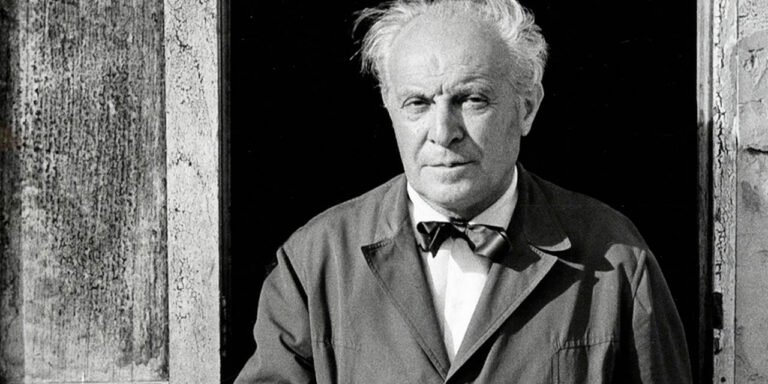
Gio Ponti
Architecture, objects and everyday life. Gio Ponti moved between scales with a lasting interest in lightness, proportion and creative freedom.
Start with his Olivari handles in our catalogue. Then explore his biography and five landmark works that place these small architectural objects in a much wider story.
01 / Bring the design into your project
Gio Ponti and Olivari:
architecture in the hand.
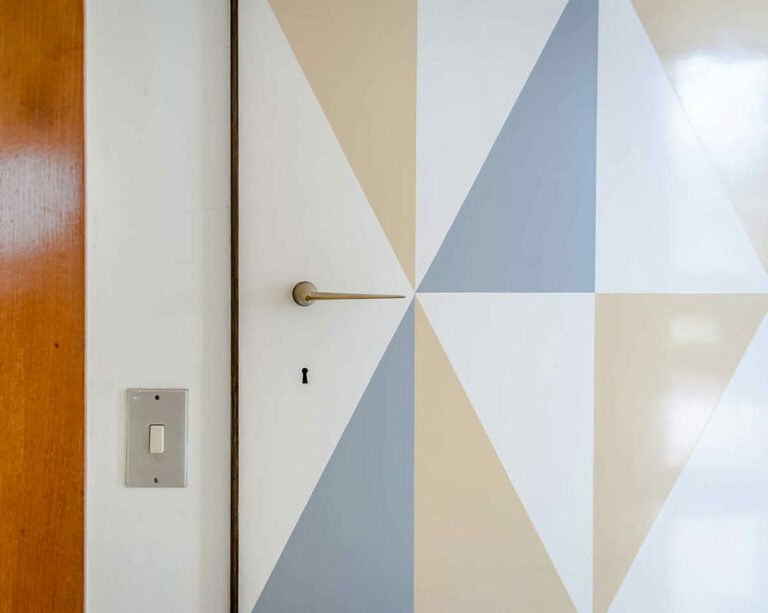
A door handle is a daily meeting between a building and its occupants. In his collaboration with Olivari, Gio Ponti brought design into the relationship between lever, pivot and door. Lama and Cono offer two distinct expressions of this approach. The products below link directly to our catalogue, where you can check current finishes and configurations.

Olivari / Gio Ponti / 1956
Lama
A slim profile and precisely considered edges bring a clear geometric idea into contact with the hand. The M107 model is worth considering for contemporary doors and interiors where the handle should remain a subtle, readable detail.

Olivari / Gio Ponti / 1956
Cono
The connection between the lever and its base gives Cono a compact architectural character. Its history is also connected with Villa Planchart in Caracas. Explore the product page to compare finishes and the available door configurations.

Olivari / A re-edition in the Lama family
Lama L
The elongated version retains the restrained character of the Lama family. Compare lever proportions, door dimensions and grip before choosing. Its technical information is the starting point for checking suitability for your project.
For a coordinated specification, explore the Olivari catalogue and check door and window versions with our team.
Olivari’s current catalogue dates Lama and Cono to 1956. Historical accounts record earlier stages in Cono’s development and use: design, prototype and production dates do not always coincide. Read Olivari’s historical account.
02 / A culture of design
Who was
Gio Ponti?
1891–1979
Milan, Italy
Architect, designer, artist and editor
A practice spanning industry and craft.
Domus, 1928
A platform for the culture of living.
Gio Ponti was a central figure in twentieth-century Italian design. His work extended across buildings, furniture, ceramics and publishing, treating them as connected aspects of the inhabited environment. Alongside practice, he taught at the Politecnico di Milano and worked as an editor.
His artistic direction at Richard Ginori, from 1923 to 1930, and the founding of Domus in 1928 demonstrate the connection between production and cultural debate. The collaboration with Cassina led to Superleggera, while his work with Olivari brought the same attention to the scale of architectural hardware.
His buildings combine construction and expression in different ways. Palazzo Montecatini, the Pirelli Tower and Villa Planchart respond to distinct questions of work, city and domestic life. The breadth of his career is a reason to look beyond any single stylistic label. Cassina biography · Olivari profile.
Three ways of looking / Editorial interpretation
Lightness. Geometry. Colour.
01 / LIGHTNESS
Ask how much material an object needs to express its purpose. Lama’s slender profile makes the relationship between surface, structure and use especially clear.
02 / GEOMETRY
A line can organise a room. When specifying a handle, compare its profile with the joints, frames and proportions of the door around it.
03 / COLOUR AND LIGHT
A finish changes with its setting. Compare metal, timber and wall colours under the lighting intended for the completed project.
03 / Beyond the handle
Five iconic works by Gio Ponti
This selection places his objects in the wider context of architecture and furniture. These are historical references; products offered through our website are identified in the Olivari section above.
Milan / Opened in 1960
Pirelli Tower
A landmark of modern Milan, developed by a team including Ponti, Fornaroli and Rosselli, with structural contributions from Pier Luigi Nervi and Arturo Danusso. Its tapering silhouette makes the idea of a slender, luminous tower visible across the city.
Caracas / 1953–1957
Villa Planchart
A house conceived through its spaces, furnishings and details together. Cono belongs to this story: a small object participates in the vision of the whole building. It offers a useful reference for coordinated interior specification.
Cassina / 1957
699 Superleggera
Developed with Cassina, the chair balances strength with very low weight. It weighs approximately 1.7 kg and uses legs with a triangular section. In 2024 it received a Compasso d’Oro lifetime achievement award for the product.
Sorrento / 1962
Hotel Parco dei Principi
Ceramics, patterned surfaces and the Mediterranean setting meet in a comprehensive interior. White and blue create continuity between architecture and decoration. The hotel helps explain why colour can be part of a building’s spatial organisation.
Denver / Opened in 1971
Denver Art Museum, Martin Building
Designed with James Sudler Associates, the museum offers a vertical interpretation of the visitor experience and a distinctive civic presence. Now named the Martin Building, its history and later transformations are documented by the museum.
Gio Ponti in four dates
1928
Domus is founded.
1956
Lama and Cono in Olivari’s design history.
1957
Superleggera for Cassina.
1971
The Denver museum opens.
04 / From inspiration to specification
Choosing Gio Ponti door handles
Start a comparison of Lama and Cono with the door itself: material, leaf thickness, lock and available clearance. Then look at the handle in its intended position rather than as an isolated object. A thin lever can have a very different presence against pale timber, dark paint or a strongly patterned surface.
The key escutcheon must match the lock. Depending on the model, the options may include Patent, Yale or no key escutcheon. Check the actual choices on the product page. Bathroom locks and unusual installations should be confirmed with the technical team before ordering.
Compare polished and satin finishes with the hinges, taps and other metals in the interior. Similar commercial finish names from different manufacturers do not guarantee an identical colour or reflection. A physical sample is useful, particularly when coordinating visible hardware across several rooms.
For Olivari products, order preparation takes 5 working days from receipt of payment; transit time is additional. Current prices, finishes and configurations are shown on the product pages. For project quantities, our Milan team can help with a coordinated quotation and international supply.
05 / Frequently asked questions
Gio Ponti: questions and answers
Which handles did Gio Ponti design for Olivari?
His historical Olivari designs include Lama, Cono and Anello. Olivari also documents E42. This page links to Lama, Cono and the Lama L re-edition in the Virgin Architects catalogue. A historical reference does not in itself mean that a model is commercially available.
How do Lama and Lama L differ?
Lama L is the elongated version of the Lama family. Compare the dimensions, technical documentation and lock configuration on each product page before ordering.
Can I coordinate door and window handles?
Yes, door and window versions are available within the Lama and Cono families. Window operation and technical compatibility still need to be checked: a coordinated appearance does not replace a dimensional check.
Where can I buy original Olivari Gio Ponti handles?
Virgin Architects provides Olivari product pages with selectable finishes and configurations. Our team offers advice from Milan for projects in Italy and internationally, including quotations for coordinated hardware packages.
Virgin Architects / Milan
A designer detail.
A considered choice.
Start by choosing Lama, Cono or Lama L. Open the product page to compare the finish, key escutcheon and quantity before building your request.


